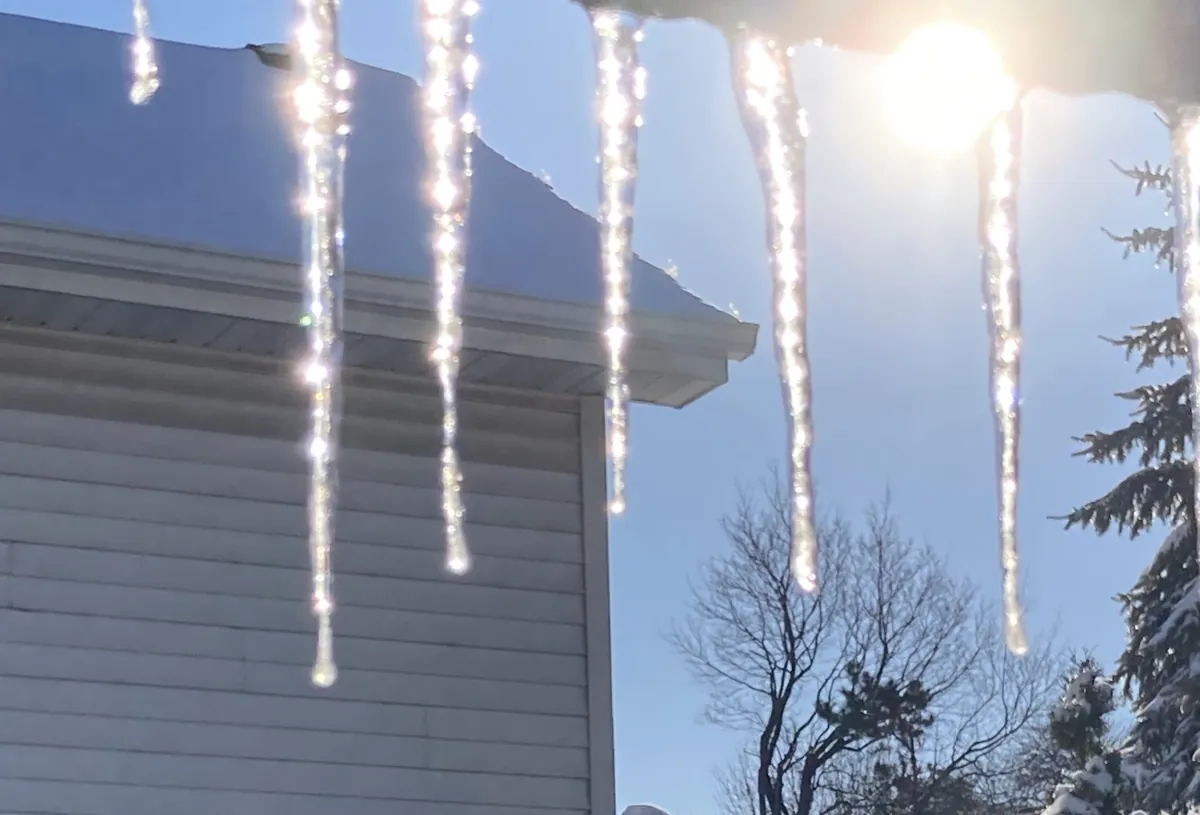
How ice dams cause interior damage
Heat escaping into the attic warms the roof deck. Snow melts, runs down to the cold eave and refreezes into a ridge of ice. More meltwater ponds behind it, finds its way under shingles and drips into the attic, the wall cavities and the ceilings below. Vermont’s long winters, frequent freeze-thaw cycles and older, lightly insulated homes make this one of the state’s most common claim types.
Ice dam claim appraisal in Vermont covers the interior damage the water causes, and sometimes the roof repairs needed to stop it, depending on the policy.
What policies usually say
Many homeowners policies cover sudden water damage from ice dams to the interior. Some exclude or limit damage to the roof itself, or the cost of removing the ice. A few policies written in snowy states treat ice dam leakage through specific wording. Read the water and roof sections together, and look for any exclusion that mentions freezing, ice or snow.
Where ice dam estimates fall short
- Wet insulation left in place. Soaked fiberglass and cellulose lose their value and can hold moisture against framing.
- Ceilings patched instead of replaced. Plaster ceilings that sagged or delaminated.
- Wall cavities. Water traveling down exterior walls behind finished surfaces.
- Repeat damage. If the first payment did not fix the cause, a second winter adds a second loss.
Frozen pipes
A pipe that freezes and bursts usually counts as a sudden discharge of water. The key condition is often heat: policies commonly exclude freeze damage in an unoccupied or vacant building unless heat was maintained or the water was shut off and drained. For camps and second homes, keep records of fuel deliveries, thermostat settings and any monitoring alerts.
Document while it is still winter
Photograph the ice at the eaves and the icicles before they melt, and the stains as they appear. Our guide on ice dam claims in Vermont walks through what to capture.
Questions about this service
Is removing the ice dam covered?
Some policies pay reasonable costs to prevent further damage, which can include ice removal. Others exclude it. Keep receipts either way.
My roof leaked from an ice dam two winters in a row. Is the second one covered?
Each sudden event can be a new claim, but the carrier may argue the cause was not fixed. Document repairs made after the first loss.
The house was empty when the pipes froze. Am I covered?
It depends on the vacancy and heat conditions in your policy and on what steps were taken to keep heat on or drain the system.