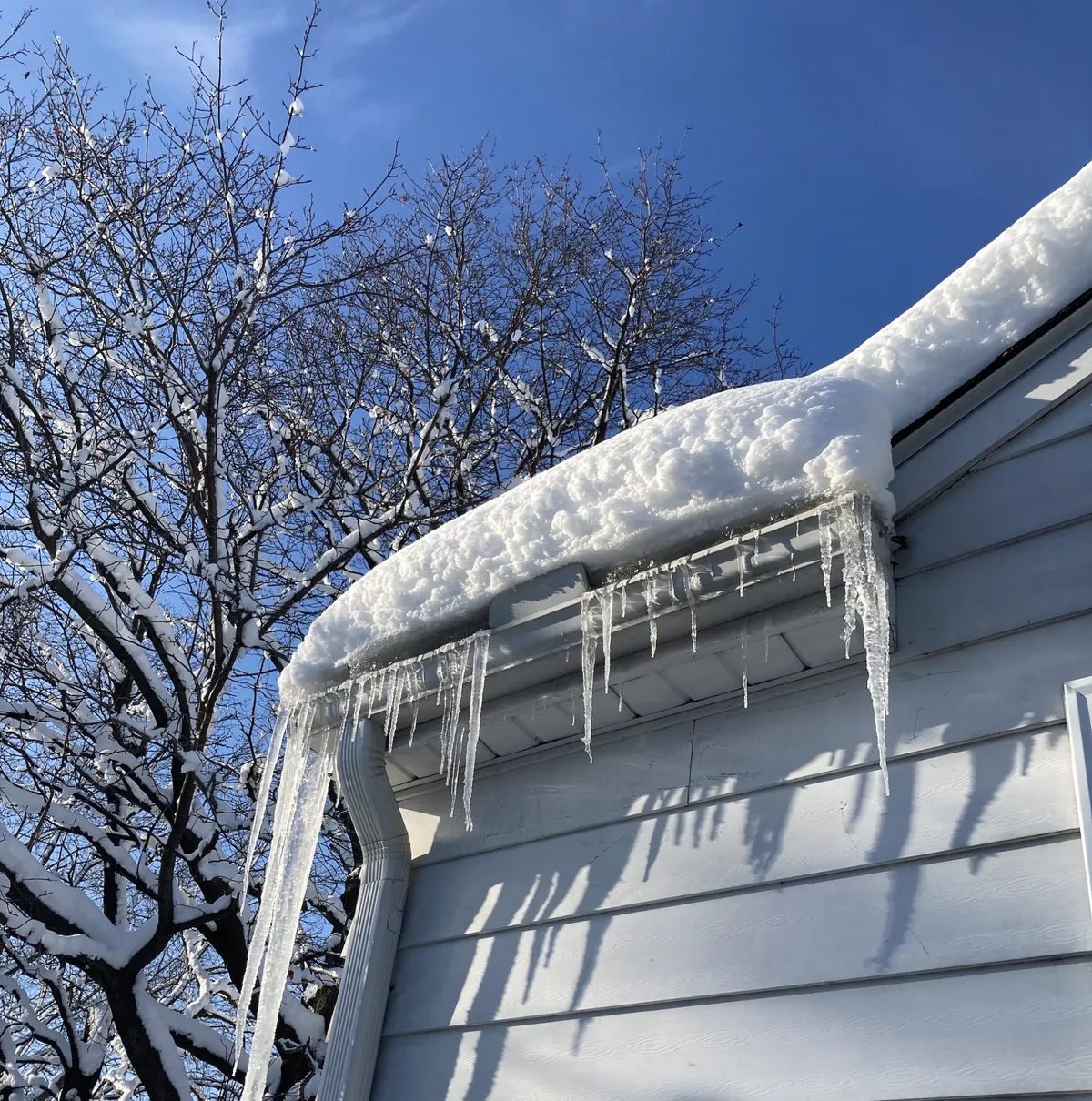
If you own an older home in Vermont, you have probably seen it: thick icicles along the eaves, a brown stain spreading across a bedroom ceiling, water dripping from a window header in February. Ice dam claims in Vermont are among the most common winter losses, and among the most misunderstood.
Why ice dams form
Warm air leaks from the living space into the attic and heats the underside of the roof. Snow on the upper roof melts, runs down to the colder overhang and freezes again. Over days and weeks, that ice builds into a dam. Meltwater pools behind it, works under the shingles and leaks into the attic, wall cavities and ceilings. Long winters, frequent thaws and older homes with little insulation make the problem especially common here.
What policies usually cover
- Interior damage. Most homeowners policies cover sudden water damage to ceilings, walls, insulation and floors caused by ice dam leakage, subject to the deductible.
- The roof itself. Some policies cover roof repairs needed because of the ice dam. Others exclude damage to the roof from freezing or treat it as maintenance.
- Ice removal. Steaming or removing ice to stop further damage may be covered as a reasonable repair to protect the property, or it may be excluded. Keep receipts either way.
- Mold. If water sat for weeks before it was found, mold may be limited by a sub-limit.
What to document
- Photograph the ice at the eaves and any icicles, from the ground, with a date stamp.
- Photograph interior stains as soon as they appear and again as they spread.
- Check the attic with a flashlight and photograph wet insulation or frost on the sheathing.
- Keep a short written log: when you first saw water, what the weather was doing and what you did.
- Save receipts for ice removal, tarps, fans and dehumidifiers.
Where estimates fall short
Ice dam estimates often patch a ceiling stain and paint. But water usually travels farther than the stain shows. Wet insulation should usually be removed, plaster ceilings can delaminate, and wall cavities behind finished surfaces may be soaked. A thorough scope follows the water from the roof edge to wherever it stopped.
Fixing the cause
Insurance generally does not pay to improve attic insulation or ventilation, which is the long-term fix. But if you do not address the cause, the carrier may push back on a second claim next winter. Keep records of any improvements you make.
When appraisal fits
If the carrier accepts the ice dam loss but its estimate leaves out the insulation, the wall cavities or proper plaster repair, that is an amount-of-loss dispute. An estimate review is the usual first step.
This guide is general information, not legal advice. Your policy’s wording controls.