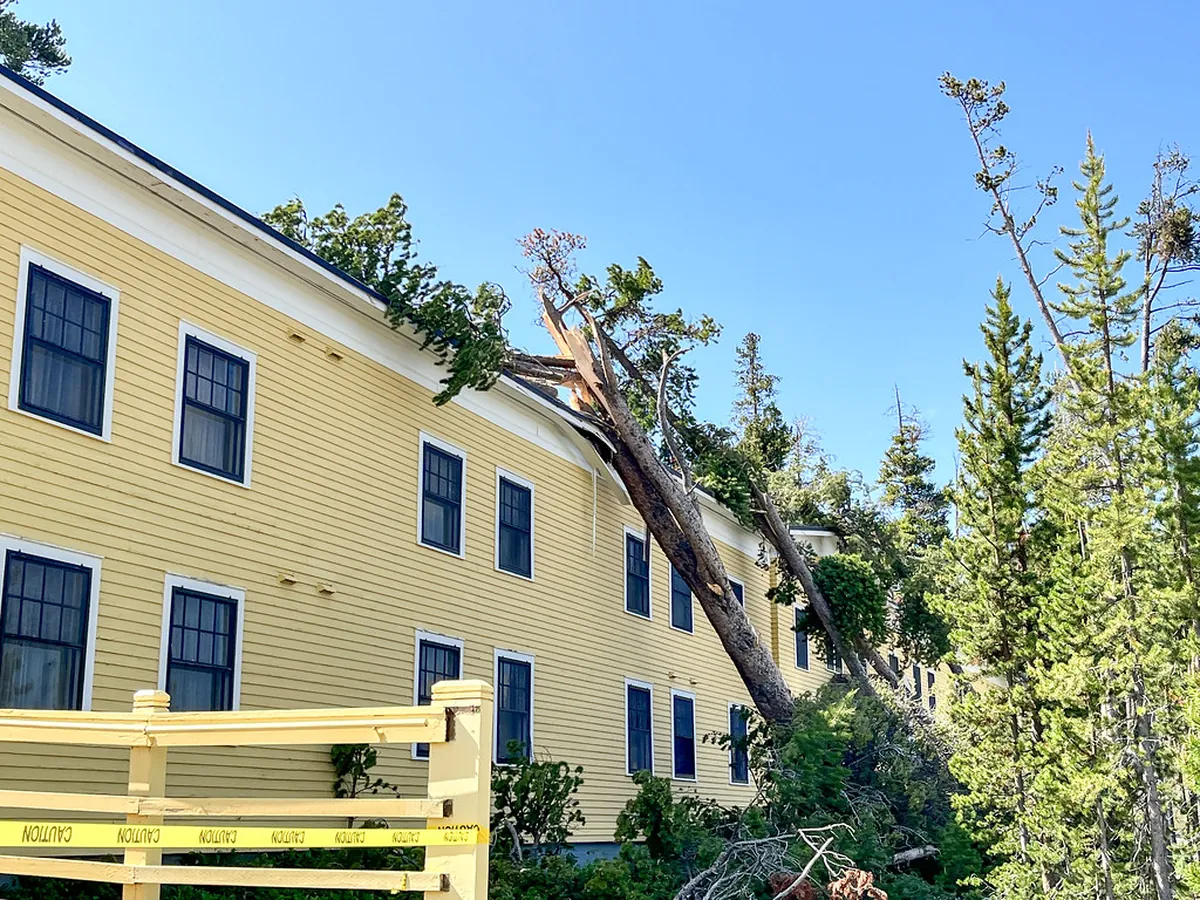
Vermont’s wind events
Vermont sees a handful of weak tornadoes in a typical decade. Much more common are microbursts, where a collapsing thunderstorm sends a burst of straight-line wind into a valley or ridge, and strong non-thunderstorm winds such as the Halloween storm of 2019, which knocked out power to well over a hundred thousand customers in the state. Downslope winds on the western side of the Green Mountains can also gust far above forecasts.
Wind damage appraisal in Vermont focuses on what the wind actually did: the creased and lifted shingles, the torn ridge cap, the racked porch, the siding pulled off at the corners.
Where wind estimates fall short
- Creased shingles counted as undamaged. A shingle that lifted and folded has lost its seal even if it lies flat now.
- Spot repairs on brittle roofs. Older shingles often crack when lifted for repair.
- Siding and trim matching. Wind rarely damages a single elevation evenly.
- Interior water from wind-driven rain. Ceilings and insulation stained after openings were created.
- Debris removal and trees. Policy sub-limits for trees vary; removal from a damaged structure is treated differently from yard cleanup.
Check your deductible
Some policies written in Vermont carry a separate wind or windstorm deductible, sometimes a percentage of the dwelling limit. Our percentage deductible calculator shows what that means in dollars.
Questions about this service
Is a microburst covered like a tornado?
Most property policies cover windstorm generally, without distinguishing the type of wind event. The deductible that applies is what you need to check.
The adjuster said the damage was old. What now?
Ask for the reasoning in writing. We compare the claimed damage to weather data and physical evidence before deciding whether appraisal fits.
Do you need weather reports?
We pull storm data for the date and location as part of our review.